I focus on shared decisions, not perfect artwork, to help tamariki practise teamwork through art with the support of our dedicated team. For children aged 2–5, I start with safe materials, a surface everyone can reach and three simple rules: ask before taking, make space and listen.
My approach is simple:
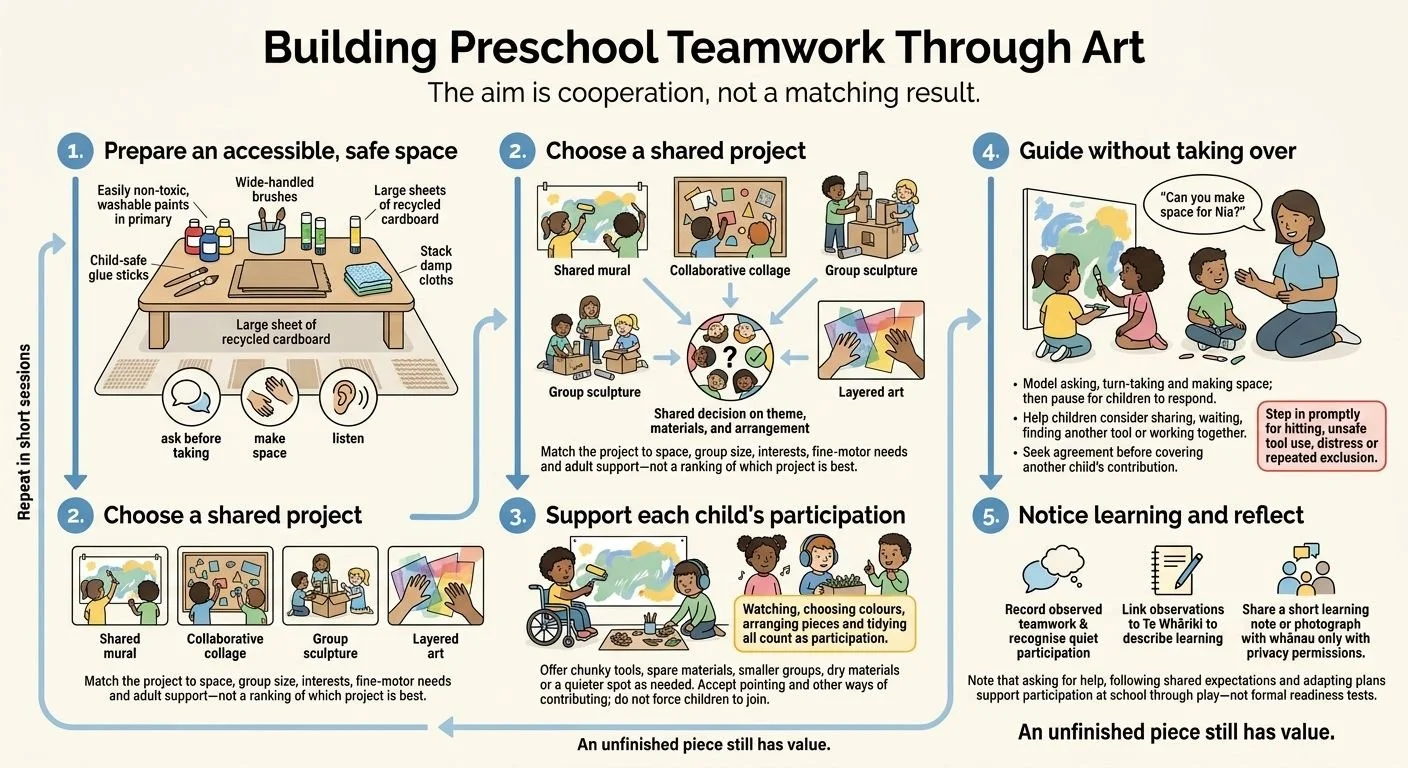
Choose a shared project: a mural, collage, sculpture or artwork built in layers.
Support each child’s participation: offer different tools, quiet spaces and ways to contribute without painting or gluing.
Guide without taking over: model turn-taking, help children work through disagreements and step in when anyone is unsafe or distressed.
Notice the learning: reflect briefly with children, share progress with whānau and link observations to Te Whāriki and participation at school.
The aim is cooperation, not a matching result. I use short sessions and let children’s choices guide the work - at preschool or at home.
Group Art for the Preschool Classroom
1. Set Up an Art Space for Everyone
Start with one large shared surface that children can reach from both sides. Lay large paper or cardboard on a low table or clean floor so children can work side by side. Keep pathways clear, with enough room for tamariki to move, reach supplies and step back to look at their work. Store materials in labelled, low containers within safe reach.
Choose Safe Materials and Set Simple Rules
Provide washable, non-toxic paint, wide-handled brushes, child-safe glue and recycled cardboard. Follow age guidance, and check for staples, sharp edges and choking hazards. Check allergies with whānau, supervise materials throughout and make sure children wash their hands afterwards.
Agree on three simple expectations: ask before taking, make space for others and listen when someone is speaking. Show children what each looks like and add picture reminders. If they need more time, spread the project over several short sessions. Have a safe place for unfinished work so there’s no pressure to rush.
Support Different Ages and Needs
For children aged 2–5, offer chunky tools, spares of popular tools and materials, and smaller groups where helpful. Use non-slip mats and a stable work surface at a suitable height. Provide dry materials or a quieter spot nearby for children who find wet textures, noise or crowds uncomfortable.
Watching, choosing colours, arranging pieces and tidying all count as participation. Accept pointing as a way to contribute; not every child needs to paint or glue. Let children make their own art choices rather than assigning roles only by age. Don’t force anyone to join in or take a tool away while it’s being used. Offer another material and come back to turn-taking later.
With the space ready, choose a project that calls for shared decisions and turn-taking.
2. Choose a Group Art Project
Use the shared space from the last section to choose a project everyone can reach and work on together.
Make a Shared Mural or Collage
Invite tamariki to choose a theme, such as an Auckland park or an imaginary habitat. Choose a project that encourages children to plan, share and adjust together.
For a mural, show how colours and marks can connect across the page. For a collage, let children arrange pieces before gluing them down. Offer roles children can swap between, such as choosing materials, adding details or gluing.
Build a Sculpture or Add Art in Layers
For a group sculpture, invite children to test how boxes and cardboard tubes connect and balance before attaching them. Share decisions rather than naming one leader, and give children time to try a new arrangement before stepping in to help.
For layered art, add paint, stamps and collage over several short sessions. Look at the existing marks together before adding anything new, and seek agreement before covering another child’s contribution. If children want different things, keep pieces side by side or offer a new section so no one’s work is covered without permission.
Base your choice on space, group size, children’s interests, fine-motor needs and available adult support - not which method seems best overall. Collage suits small tables; sculpture needs room; layered art suits children who can return to the same work.
As children work, adults can help them take turns and solve problems together.
3. Guide Teamwork and Notice Learning
As the project develops, use simple language and prompts to support turn-taking, problem-solving and shared decisions. Once children start working together, guide them without taking over.
Help Children Take Turns and Solve Disagreements
Model short phrases children can use to ask for a paintbrush, make space at the mural or offer someone the next turn with the glue. Demonstrate only when needed, then pause to give children time to respond.
If two children reach for the same paintbrush, you might say they both want the blue brush and ask what they could do.
When it’s safe, let children suggest sharing, waiting, finding another brush or working together. Notice helpful actions - offering a tool, listening to a peer or making room - rather than praising only the finished artwork.
If disagreement continues, name the problem without taking sides and acknowledge each child’s view. Offer two or three simple choices, then let children decide when it’s safe. Step in promptly if there’s hitting, unsafe tool use, distress or repeated exclusion.
Once the conflict settles, briefly reflect with children on what they did together.
Talk About Teamwork and Share Progress with Families
Afterwards, keep reflection brief. Welcome responses through speech, pointing, gestures and home languages. Ask questions like:
How did we decide what to do?What did someone else add?What might we try next time?
Record what children did, such as sharing materials, watching before joining, listening or changing a plan. Keep what you observed separate from your interpretation, and recognise quiet participation too.
Share a short learning note or photograph showing teamwork during the art activity with whānau, following privacy permissions. Invite home-language words and interests, without expecting any child to speak for a whole community.
These observations can also show links to Te Whāriki and the move towards school.
Connect Teamwork with Te Whāriki and Starting School
Link observations from the art project to Te Whāriki: Contribution | Mana Tangata includes helping others and including peers; Communication | Mana Reo includes expressing ideas; Wellbeing | Mana Atua includes managing frustration; Exploration | Mana Aotūroa includes testing ideas. Use these links to describe learning, not to create a checklist.
Asking for help, sustaining attention, following shared expectations and coping with changes to plans all support participation at school. Keep these experiences within play, rather than turning them into formal lessons or school-readiness tests.
Conclusion: Start Small and Practise Together
Keep the routine simple: prepare materials everyone can use, model cooperative language and acknowledge each child’s contribution.
Use the same approach for family art time, with large paper and a few safe, simple materials. Agree on a shared goal, let children choose what to add and stop while they’re still interested.
Repeat short sessions before making activities more complex. An unfinished piece still has value: supported art experiences help tamariki learn to cooperate - not produce perfect artwork.
FAQs
What if my child prefers making art alone?
It’s natural for children to enjoy making art on their own. Solo art time gives them space to try out ideas at their own pace, building confidence and helping them express themselves. At Little Dinosaurs Childcare, we support each child’s own way of making art.
We offer both solo and group art activities in our small-group setting. This gives children room to develop their ideas while learning to work and connect with others.
How can I stop one child dominating group art?
Give everyone a turn leading part of the project by rotating leadership roles. Encourage children to share their ideas with open-ended questions, such as, “How can we make sure everyone gets a turn with the paintbrush?”
If disagreements arise over materials or decisions, help children negotiate and solve the problem rather than stepping in to take over. Plan tasks with clear, shared roles so children can use their different strengths at each stage.
How can I tell if art activities improve teamwork?
Watch how children work together on shared art projects. Look for progress in sharing materials, taking turns with tools, and agreeing on roles or colour choices. Notice whether they listen to each other, offer kind suggestions, and work through disagreements about their artwork together.
Supporting one another, celebrating each other’s contributions, and expressing ideas clearly are also signs that children are building social skills and learning to work towards a shared goal.