I start with connection, not a finished picture. For children aged 2–5, I offer two or three safe art materials, stay close and let them choose, pause or stop. Art can help children express feelings, but it isn’t a fix for every upset.
Here’s my approach:
Keep it safe: Use age-appropriate, non-toxic supplies and supervise. Non-toxic does not mean edible.
Follow their lead: Try drawing, collage, playdough, painting or picture stories. I don’t guess what colours or marks mean.
Keep it calm: Reduce noise and clutter, watch for frustration and <u>stop rather than push through</u>.
Build familiarity: Practise when children are calm, offer art during daily transitions and share what helps with kaiako, including feeling words in your home language.
Know when to get help: If distress persists, skills are lost or behaviour becomes unsafe, I seek advice from kaiako and a health professional. Immediate danger calls for urgent help.
My aim is simple: support the child’s wellbeing - not the artwork.
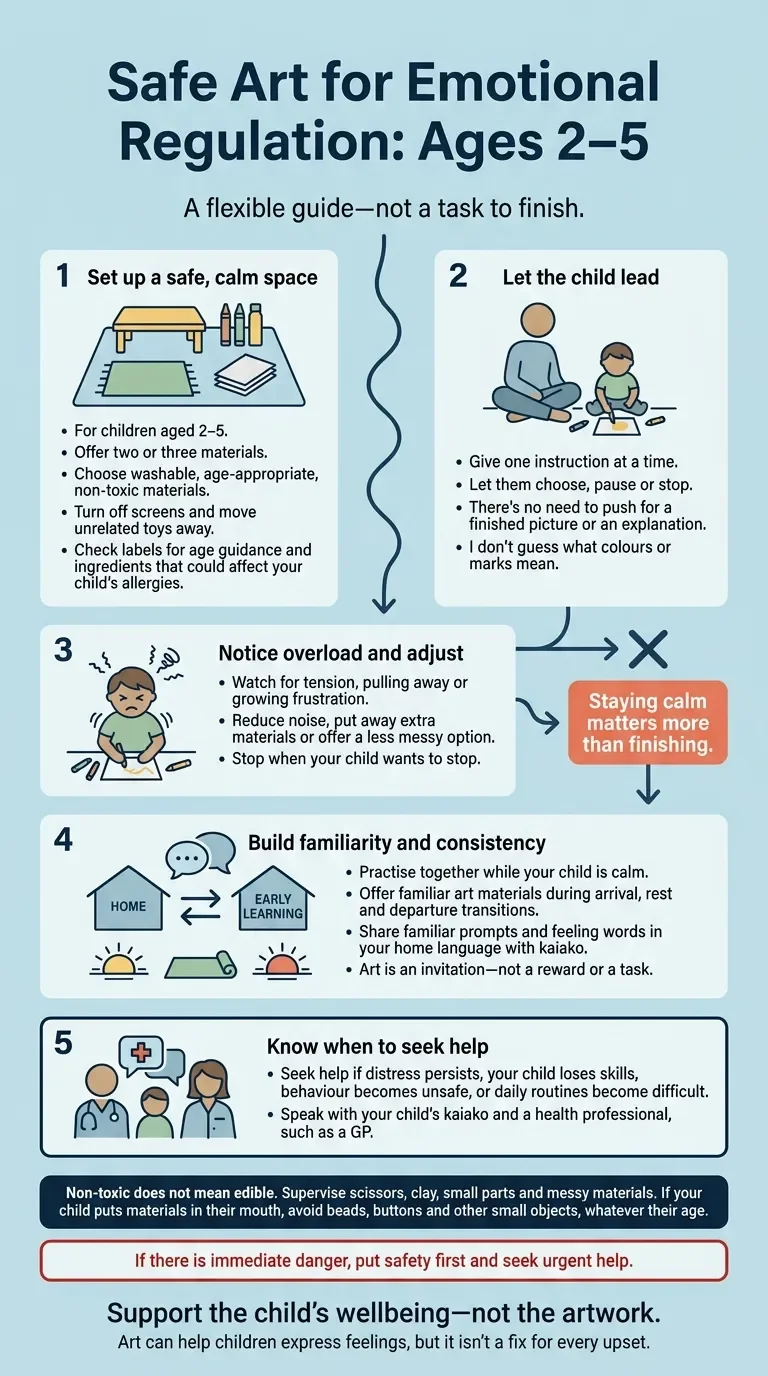
Safe Art for Emotional Regulation: Ages 2–5
Set Up a Safe Art Space
Set aside a corner of the kitchen table or a protected area on the floor. Cover the surface with newspaper or a washable cloth, and use an old shirt to protect your child’s clothing.
Put out just a few materials, turn off screens and move unrelated toys away. Leave out example pictures that children might try to copy. A calm, uncluttered space helps children stay settled. Next, choose materials that are safe for your child’s age.
Choose Safe Materials for Your Child’s Age
Choose washable, age-appropriate, non-toxic materials, such as crayons, paint, large paper, glue sticks, modelling clay and child-safe scissors. Supervise the use of all scissors, clay and small parts.
Check labels for age guidance and ingredients that could affect your child’s allergies. Non-toxic does not mean edible, so keep art materials away from food.
Stay close during messy play. Our passionate educators use these techniques to support every child's unique learning journey. If your child puts materials in their mouth, avoid beads, buttons and other small objects, whatever their age. Store unused supplies out of reach. With the materials ready, keep the activity simple to help everyone stay calm.
Keep Steps Simple and Notice Overload
Offer two or three materials and give one instruction at a time. Let your child spend time making marks or shaping clay before introducing anything else. There’s no need to push for a finished picture or an explanation.
Watch for tension, pulling away or growing frustration. These can be signs that the activity is becoming too much. Reduce noise, put away extra materials or offer a less messy option.
Stop when your child wants to stop. Staying calm matters more than finishing, and stopping early protects your child’s sense of control and calm.
Match Art Activities to Emotional Needs
Once the space feels calm and safe, choose an activity that suits your child’s feelings, energy and attention. Stop or switch activities if it feels like too much.
Drawing and Collage to Express Feelings
Offer paper, markers or charcoal. Give a short prompt only if your child needs help getting started. For collage, let them choose recycled paper, fabric scraps or harakeke - and decide what their work means.
Some children prefer making marks. Others respond better to movement, texture or story.
Playdough, Painting and Picture Stories
Painting with simple tools gives children steady, repeated movements to focus on. Squeezing and rolling playdough gives restless hands a safe outlet.
Use puppets, masks, a story table or felt boards to tell a short story. This can help children name feelings and practise asking for help.
Make Art Part of Daily Routines
Once your child knows an activity, repeat it at the same points in the day. Offer familiar art materials during arrival, rest and departure transitions. Art is an invitation - not a reward or a task.
Practise Together When Your Child Is Calm
Practise together while your child is calm. If they become distressed, put safety first and return to art later.
Pass on what works at home so others can offer the same support.
Share What Helps With Kaiako
Tell kaiako what settles your child. Share familiar prompts and feeling words in your home language, too. This helps keep support consistent between home and the early learning centre.
If the activity stops helping your child settle, step back and seek extra support.
When to Seek Professional Help
Seek help if distress persists, your child loses skills, behaviour becomes unsafe, or daily routines become difficult. Speak with your child’s kaiako and a health professional, such as a GP.
If there is immediate danger, put safety first and seek urgent help.
Conclusion: Keep Art Safe, Optional and Consistent
Your child’s wellbeing comes before a finished picture. Let them choose, pause or stop. Stay close without taking over.
Link Art at Home and in Early Learning
Share your child’s art choices and the calming words you use with kaiako. Ask which materials or calming steps work best in their setting, so support stays consistent.
Start With One Familiar Activity
Begin with one familiar activity, then offer it again when your child needs to settle. Focus on steady support rather than a perfect picture.
FAQs
How can I tell if art helps my child regulate emotions?
Look for signs that art gives your child a safe space to share feelings or ideas they can’t yet put into words. You may also notice their confidence growing as they practise tasks at their own pace in a relaxed setting.
In group projects, sharing tools and communicating with peers can be signs of greater cooperation - and growing emotional and social resilience.
What if my child refuses art when upset?
Children express emotions in different ways. If your child doesn’t want to make art when they’re upset, offer movement, dancing, drumming, calming sounds or quiet play instead. Give them time and space, respect their needs and communication style, and keep the setting safe and free from pressure.
At Little Dinosaurs Childcare, we respect these differences and support each child as they learn to regulate their emotions.
How can I discuss feelings without interpreting my child’s artwork?
Focus on your child’s own reflections, rather than interpreting their visual choices for them. An open-ended prompt gives them room to share their thoughts and feelings:
“Tell me about your picture”
At Little Dinosaurs Childcare in Epsom, Auckland, we value each child’s perspective. Their artwork offers evidence of learning, and that evidence means most when paired with the child’s own words.