How Art Supports Emotional Regulation in Young Children
When kids aged 2–5 struggle with big emotions, art offers a way to express feelings they can’t yet put into words. Whether it’s painting bold colours to show frustration or using clay to work through anxiety, art helps children process emotions and develop emotional regulation. This is especially important as their prefrontal cortex - the part of the brain responsible for self-control - is still maturing.
Key takeaways:
Art helps children externalise emotions: Turning feelings into something physical, like a drawing or sculpture, makes them less overwhelming.
Non-verbal expression: Colours, shapes, and textures act as a language for kids whose verbal skills are still developing.
Group art builds social skills: Collaborative projects teach teamwork and emotional awareness.
Daily transitions: Creative activities can smooth stressful moments like morning drop-offs or post-playtime wind-downs.
Simple steps like creating an art corner with safe, easy-to-use materials or encouraging open-ended discussions about their work can make a big difference. Art isn’t about the final product - it’s about the process of understanding and managing emotions.
Why Art Helps Children Manage Their Emotions
How Creativity Supports Emotional Development
Art offers children a way to understand and process their emotions by turning feelings into something tangible. Imagine a child pressing their frustrations into clay or painting bold red streaks across a canvas - these actions are more than just creative play. They allow children to externalise their emotions, making them feel less overwhelming. By seeing their feelings take shape in art, children can begin to understand and manage them more effectively.
What’s often more important than the finished artwork is the process itself. A four-year-old might spend time rolling clay into balls and flattening them repeatedly, working through anxiety about an upcoming event. Another child might use jagged, dark strokes to express anger, then move on to softer colours as they find calm. This journey of creating helps children move from simply identifying their emotions to actively working through them. In New Zealand, this aligns with the Communication/Mana reo strand of Te Whāriki, which highlights the importance of visual arts in developing symbolic and creative thinking. Through art, children engage in nonverbal communication, expressing what they might struggle to put into words.
Expressing Feelings Without Words
For young children aged 2–5, verbal skills are still developing, yet their emotions can be incredibly rich and intense. Art becomes a powerful tool - a way for them to communicate feelings like anxiety, joy, or frustration when words might fail. For instance, a child at kindy might use a camera to take photos of a new pet, later using these images to share emotions they can’t yet explain verbally.
Colours and shapes become their language: grey might represent sadness, bright yellow could show happiness, and swirling patterns might reflect confusion. Hands-on activities like working with clay provide not just creative expression but also a soothing sensory experience. The act of pushing, squeezing, and moulding offers a calming outlet for big emotions. As Te Whāriki Online explains:
The arts are one way that mokopuna can explore important experiences, thoughts and feelings in their lives, as well as in the wider world.
Art Activities That Support Emotional Regulation
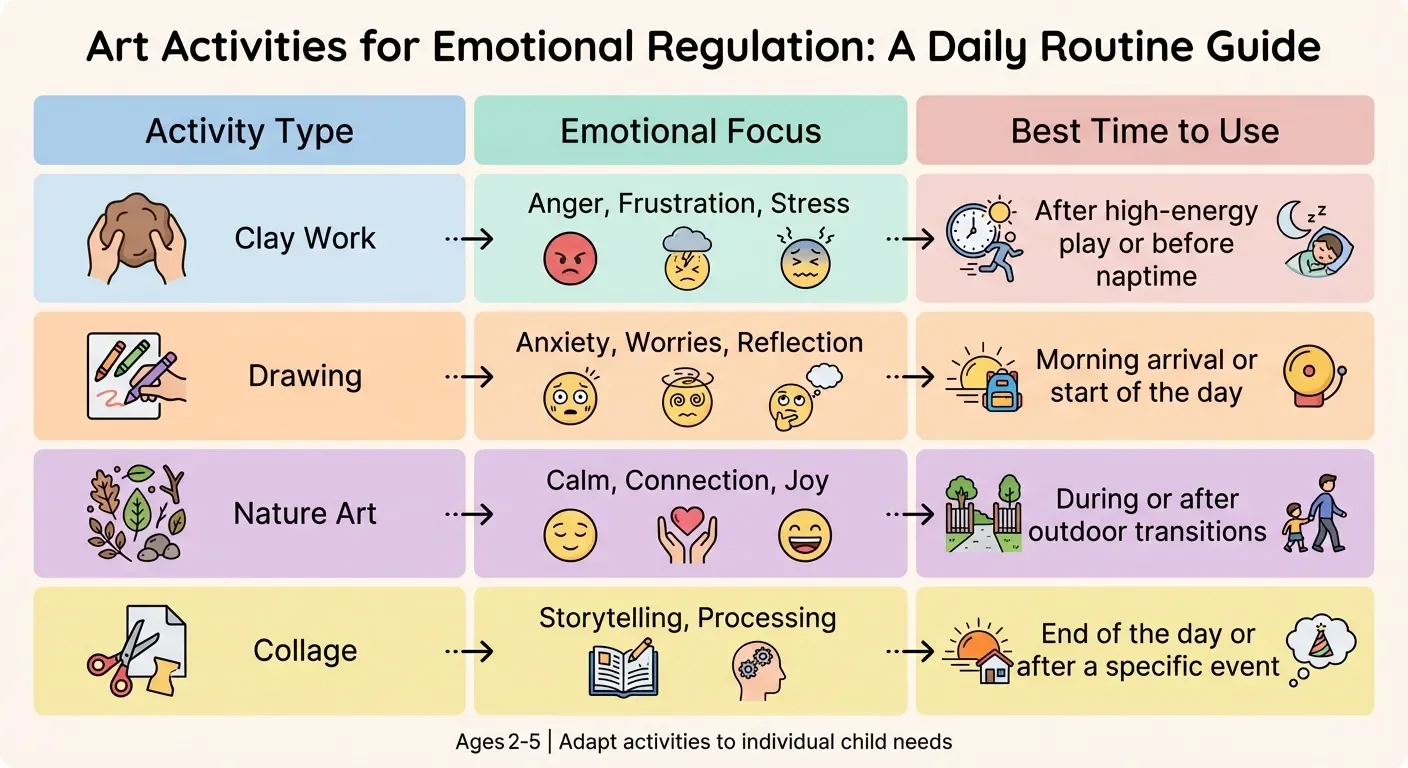
Art Activities for Emotional Regulation in Young Children by Daily Routine
Creativity plays a powerful role in helping children process and express their emotions. Certain art activities go a step further by actively supporting emotional regulation, giving children tools to navigate their feelings in meaningful ways.
Solo Activities: Painting, Drawing, and Clay Work
Individual art activities provide children with a quiet space to explore and manage emotions at their own pace. Finger painting, for instance, allows toddlers to engage with textures while releasing pent-up energy. Drawing can be particularly soothing during morning drop-offs, helping ease separation anxiety as children settle into their day. Clay work, with its tactile nature - squeezing, rolling, and pounding - serves as an excellent outlet for high-energy moments or a calming activity before naptime. These activities offer a hands-on way for children to process their feelings independently.
Having a "busy box" filled with affordable materials like string, fabric scraps, and sticks can be a lifesaver. When children feel overwhelmed, access to these supplies allows them to express themselves creatively without needing to wait for adult guidance.
While solo art activities focus on individual expression, group projects take creativity to a social level, building teamwork and emotional skills.
Group Art Projects for Social and Emotional Skills
Collaborative art projects encourage children to work together, fostering social skills and emotional awareness. For example, kindergartens often engage in shared activities like creating Pasifika tapa patterns, which not only strengthen a sense of community but also celebrate cultural identity. These group settings naturally teach problem-solving; for instance, when two children want to use the same scissors, they learn to negotiate and share.
Rosemary D. Richards and Lisa Terreni explain, "When children create visual arts in groups, the act of representing thinking visually allows them to share their ideas with others. This helps them co-construct understanding."
Teachers play a key role here by modelling emotional regulation themselves. By participating in art activities alongside children, they demonstrate how to handle challenges, such as when a project doesn't go as planned. This real-time example reinforces self-regulation and problem-solving skills.
Using Art During Daily Transitions
Art can also help children navigate emotional shifts during daily transitions. Incorporating creative activities into routines can make these moments smoother and less stressful. For instance, at Pigeon Mountain Kindergarten, a digital photography project encouraged children to capture moments from their lives at home. One child, who was still developing English skills, used photos of a new puppy to create a scrapbook, effectively expressing feelings that were hard to communicate verbally. This approach not only facilitated a smoother transition between home and kindy but also provided a meaningful way to connect.
Creating a quiet art corner stocked with calming materials like drawing paper and soft pastels can offer children a space to regroup when needed. Teachers can further support this by modelling relaxation techniques, such as deep breathing, while engaging in art alongside the children.
Local centres, such as Little Dinosaurs Childcare in Epsom, Auckland, have successfully woven these art-based strategies into their daily routines. By creating inviting spaces, they help children express themselves and find emotional calm during transitions.
Creating a Safe Space for Art Activities
An art space isn’t just a place to store supplies - it can actually play a key role in a child’s emotional growth. Often referred to as the "third teacher" by educators, a thoughtfully designed art area supports children's emotional well-being by encouraging creative expression and emotional management. A safe and welcoming environment amplifies the benefits of art, helping children develop essential emotional skills.
Selecting Safe Art Materials for Young Children
The materials you provide can make all the difference. For young children, it’s important to choose age-appropriate, safe options like washable paints, non-toxic crayons, soft brushes, and pliable clay. Keeping these materials within easy reach allows children to explore and create independently. You might also consider creating a personalised "busy box" at home, filled with items like string, stickers, patty pans, and straws. This box can evolve over time to reflect your child’s changing interests, keeping their creativity fresh and engaging.
Refreshing materials regularly ensures children remain inspired and curious. For example, at Little Dinosaurs Childcare in Epsom, Auckland, educators create art spaces that are not only safe but also inviting. These spaces empower children to explore their creativity while fostering emotional resilience in a supportive setting.
Encouraging Free Expression Without Judgement
How adults respond to children’s art can significantly influence their emotional and creative confidence. A safe space for art isn’t just about the physical environment - it’s also about how children are supported during the creative process. Avoid asking questions like "What is it?" or "What are you painting?" as these can create unnecessary pressure or performance anxiety. Instead, focus on descriptive observations, such as:
"I see you’ve used zigzag lines here."
"You’ve chosen some interesting colours."
This approach validates their effort and creativity without demanding explanations or labels.
"It is helpful to think ahead about how to speak to mokopuna about their creative expression. Open-ended questions, curiosity, enthusiasm, and descriptive language are all effective teaching strategies." - Te Whāriki Online
Adults can also support children by embracing a co-learner mindset. Joining in on art activities, rather than just supervising, shows curiosity and a willingness to experiment. It’s a great way to model that mistakes are a natural part of creating. This shared experience not only strengthens the bond between adult and child but also reinforces the idea that art is a safe outlet for exploring and processing emotions.
Teaching Emotional Words Through Art
Art offers a wonderful way for young children to connect their inner feelings with the words they need to express them. Between the ages of 2 and 5, children start developing the skills required to respond socially and emotionally in appropriate ways. During this important stage, art activities can gently introduce them to emotion-related words, building on earlier creative experiences and strengthening the link between artistic expression and emotional understanding.
Talking With Children About Their Artwork
When discussing art with children, it’s helpful to start by focusing on the basics of their work rather than jumping straight into emotions. For instance, you might say, "I see you’re using the brush to make some interesting zigzag lines". This approach helps children describe their creations without pressure.
Once children are calm, you can use tools like a feelings thermometer or picture cards to help them recognise how emotions can intensify. Go beyond simple words like "happy" or "sad" by introducing more nuanced terms such as frustrated, ashamed, blissful, or thrilled. Encourage them to connect these words to the physical sensations they might experience while creating art. These conversations are most effective when children are in a relaxed state.
Respecting Different Ways of Expressing Emotions
As you explore art with children, it’s essential to recognise and respect their diverse cultural expressions. Every child brings their own cultural background and personal experiences to their artwork, and these should be celebrated. Using emotion words in a child’s home language can strengthen their connection to both their feelings and their identity. For example, incorporating te reo Māori words like harikoa (happy) or pōuri (sad) honours their cultural heritage and supports their emotional development.
Educators can also embrace cultural art forms as meaningful ways for children to express themselves. For instance, Māori tukutuku panels or Pasifika tapa patterns can serve as powerful tools for connecting identity and creativity. At Little Dinosaurs Childcare (https://littledinosaurs.co.nz), educators incorporate these practices into daily art activities, ensuring that each child’s cultural heritage and personal expression are valued and celebrated.
Conclusion
Art has shown itself to be an incredible way for children to express and navigate their emotions. It serves as a powerful tool for helping kids build social-emotional skills and learn to regulate their feelings. When parents and educators use thoughtful approaches - like naming emotions during creative activities - children gain a deeper understanding of their inner world and how to manage it.
Incorporating art into daily life doesn’t need to be complicated or costly. Simple ideas, such as putting together a "Busy Box" with recycled materials or setting up a quiet corner for art, can provide children with a safe space to process their emotions.
Interestingly, over 95% of kindergarten teachers in New Zealand have identified emotional literacy and social problem-solving as core elements of their teaching practices. By following a child’s lead, celebrating their creative efforts, and respecting different cultural expressions, adults can foster an environment where emotional growth naturally flourishes.
Lisa Terreni, a Senior Lecturer in Early Childhood Education, highlights the value of art in this process:
Using clay gives children another language for expressing their thoughts, ideas and emerging working theories about their world.
This perspective is a reminder that every art medium offers children a unique way to share emotions they might not yet have words for. It’s a guiding principle that can enrich daily interactions with children.
At Little Dinosaurs Childcare, we prioritise these creative methods every day, weaving art into our curriculum to support the emotional well-being and imagination of young learners.
Why not try incorporating an art-based approach into your routine? Whether it’s setting up a mini art gallery at home to showcase your child’s creations or using visual thinking strategies with picture books, these small actions can make a big difference. They help build resilience and emotional awareness - skills that will serve children well throughout their lives.
FAQs
How does art help young children express emotions they can't put into words?
Art gives young children a way to express emotions they might not yet be able to put into words. Whether it’s painting, drawing, or shaping clay, these activities offer tamariki a safe and enjoyable space to work through their feelings.
By engaging in these creative experiences, kids can start to understand their emotions better, find ways to express themselves, and grow their confidence. Supporting artistic play from an early age helps foster emotional development and well-being, all while keeping the process fun and encouraging.
What are some easy art activities to help young children manage their emotions?
Art offers a fantastic way for kids aged 2–5 to explore and manage their emotions. Here are a few simple activities to try:
Colour and Feelings: Help children link colours with emotions - like using blue to represent calm or red for anger. It’s a creative, non-verbal way for them to express how they feel.
Emotion Drawing: Encourage them to draw faces or scenes that reflect different emotions. This not only expands their emotional vocabulary but also helps them process their feelings.
Clay Modelling: Playing with clay can be soothing while giving children a tactile, hands-on way to express their emotions.
These activities tie in beautifully with New Zealand’s Te Whāriki curriculum, which emphasises emotional growth through creativity and self-expression. Whether at home or in early learning centres, they’re simple and effective tools for both parents and educators.
How do group art activities help young children develop social and emotional skills?
Group art activities offer an incredible opportunity for young children to grow socially and emotionally. When tamariki come together to create, they gain a safe space to express their feelings and ideas - without needing words. This is especially valuable as they’re still finding their footing with language. Through art, they can explore emotions like happiness, frustration, or worry, all while learning how to manage those feelings in a healthy way.
Working on shared art projects also helps kids develop essential social skills. They practise sharing, taking turns, and collaborating as a team. Making decisions together encourages empathy and helps them see the world through others’ eyes. This teamwork not only builds a sense of connection but also strengthens their ability to relate to others. Group art activities are a fun, hands-on way to support emotional resilience and social development during these formative years.